You can visit Atacama any time of year, but not every month offers the same experience. The desert changes with the seasons: the light, the pre-dawn cold, the snow up high, even the crowds at the viewpoints. Here’s what each season is like, so you can choose the dates that best fit the trip you have in mind.
Atacama Desert Weather
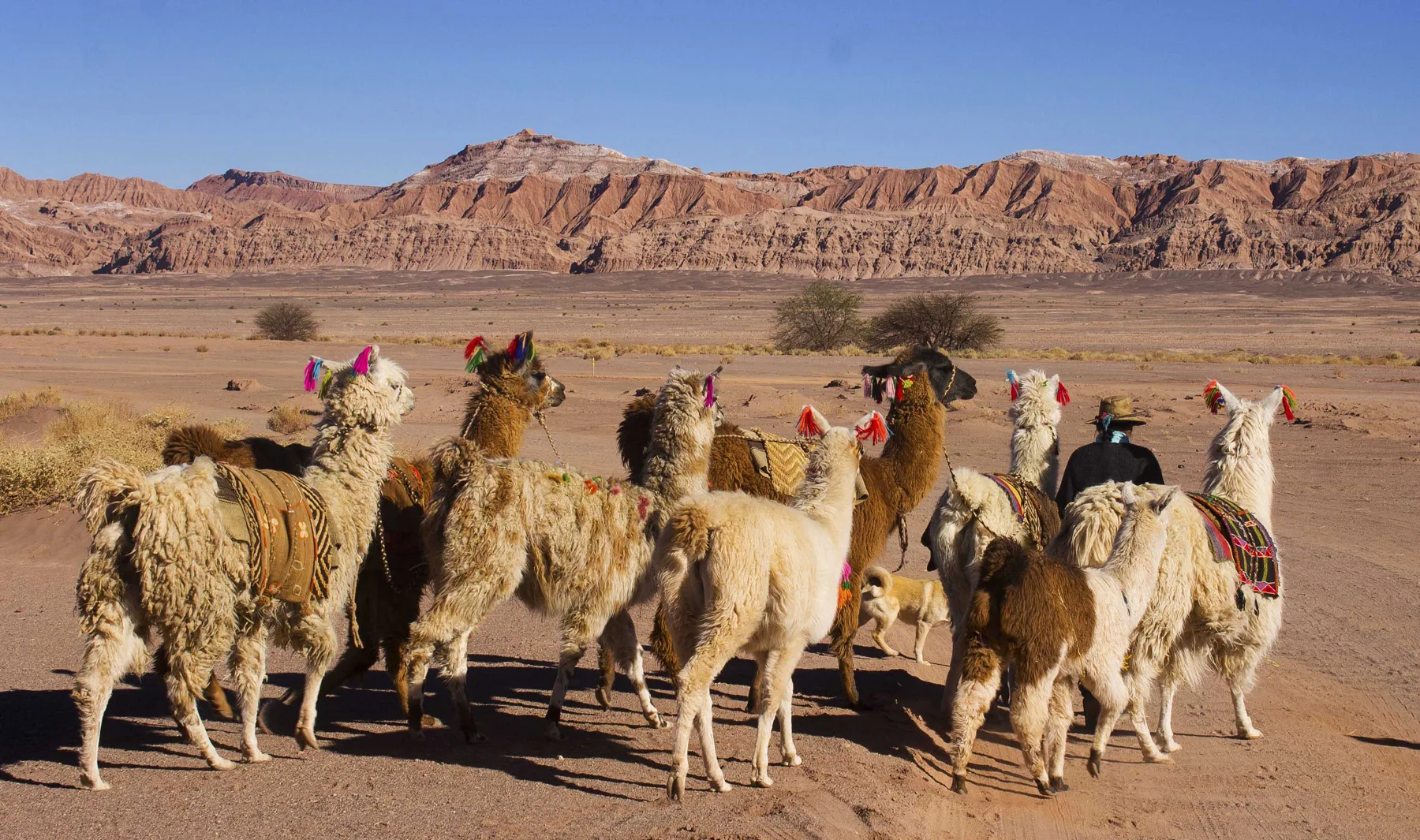
San Pedro de Atacama sits at about 2,400 meters above sea level, in one of the driest places on Earth. That means sunny days nearly year-round, very dry air and cold nights, with a swing between midday and the small hours that can top 20 °C.
Altitude matters more than the season. Day trips climb to 4,000 meters or higher—the El Tatio Geysers, the high-altitude lagoons, Piedras Rojas—and up there the weather is a different story: colder, windier and with very strong solar radiation.
Good to knowDress in layers. At five in the morning at the El Tatio Geysers, temperatures are usually below freezing, and by midday in the Valle de la Luna you’ll be down to a T-shirt. A hat, gloves, sunscreen and sunglasses go in your daypack every single day.
Best Time to Visit Atacama, Season by Season
| Season | What it’s like | Best for |
|---|---|---|
| Spring (Sep – Nov) | Mild days, cold nights and clear skies. Outside the mid-September holidays, few crowds. | Exploring at a relaxed pace, with great light for photography. |
| Summer (Dec – Mar) | Warmer days and milder nights. It’s high season, and rain can reach the higher areas. | Family trips during school vacations. |
| Fall (Apr – May) | Pleasant temperatures, very clear skies and fewer visitors. | Stargazing and high-altitude excursions. |
| Winter (Jun – Aug) | Sunny days and very cold nights; it sometimes snows on the altiplano. | Snowy landscapes and lagoons framed by white volcanoes. |
Spring: The Season We Recommend Most
Between September and November the desert is at its best balance: winter’s cold is behind you, summer’s heat and rains haven’t arrived yet, and the high-altitude roads are usually open. Just keep in mind that the week of Fiestas Patrias, Chile’s national holidays in mid-September, fills up with Chilean travelers.
Summer: Vacations and Dramatic Skies
This is the busiest time of year in San Pedro. Afternoons can bring storm clouds over the Andes, which make for spectacular sunsets in the Valle de la Luna. Book your lodging and the most popular excursions well in advance.
Fall and Winter: Skies Made for Stargazing
From April on, the air gets even clearer and the nights longer: it’s the best time for an astronomy tour. In winter, if it snows on the altiplano, the Miscanti and Miñiques lagoons and the snow-capped volcanoes make for a postcard you won’t forget. Just bundle up—seriously.

The Altiplanic Winter
Between January and March, summer rains can reach the high country—what people in northern Chile call the altiplanic (or Bolivian) winter. That doesn’t mean it rains all day in San Pedro: what usually happens is afternoon storms over the mountains. But now and then the roads to the geysers, the lagoons or the border crossing into Bolivia close for a day or two.
If you’re traveling during those months, build a spare day into your itinerary so you can reschedule an excursion. We plan all our itineraries with that buffer.
The Moon and the Stars
Atacama has some of the clearest skies in the world—there’s a reason the big astronomical observatories are here. If stargazing is a priority for you, check the lunar calendar before picking your dates: under a full moon you’ll see far fewer stars. Ideally, travel close to the new moon.

How Many Days Do You Need in Atacama?
With four days you can cover the essentials: the Valle de la Luna, the Salar de Atacama and its flamingos, the altiplano lagoons and the El Tatio Geysers. With five or six you can add the Rainbow Valley (Valle del Arcoíris), the Puritama hot springs, an astronomy tour or an archaeological route through Pukará de Quitor and the ancient village of Tulor.
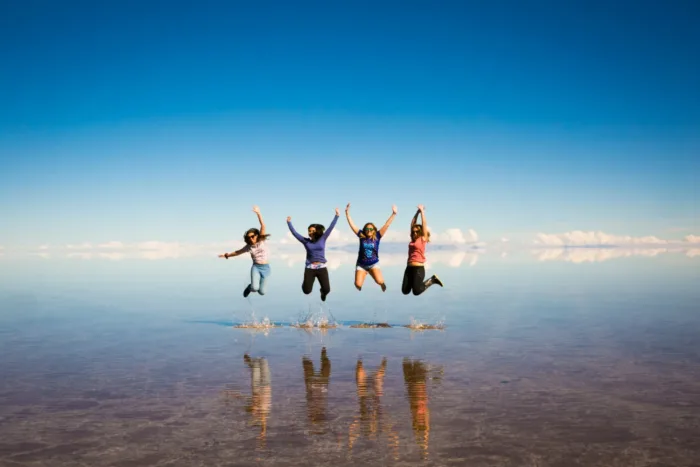
If you want to cross over to the Uyuni Salt Flats in Bolivia, add three or four more days. And one tip that holds in any season: save the highest excursions (El Tatio, Uyuni) until you’ve spent two days in San Pedro, so your body can adjust to the altitude.
- 4 days: the desert essentials, as in our Atacama Desert Expedition.
- 5 to 6 days: the essentials plus hot springs, stars and history.
- 7 to 9 days: Atacama and the Uyuni Salt Flats.
Our Atacama Trips
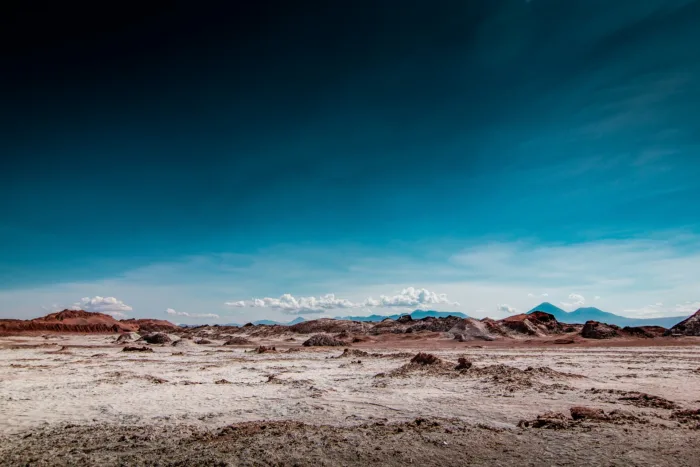
Getaway · 4 days
Atacama Desert Expedition
Experience the Atacama Desert in an authentic, back-to-nature way on a camping expedition.
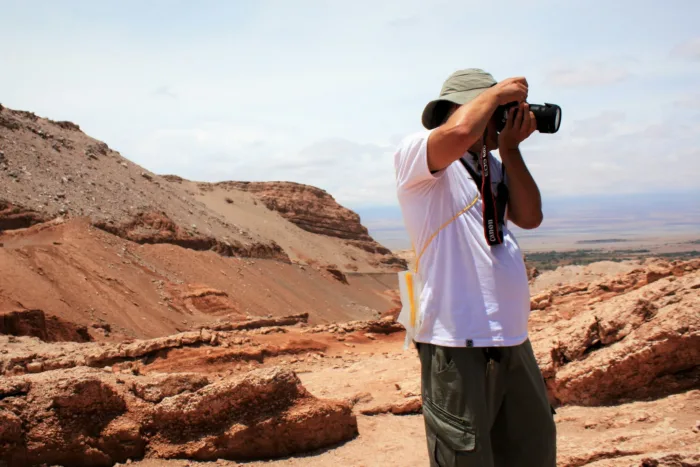
Getaway · 4 days
Archaeological Tour of San Pedro de Atacama
Trace the footsteps of the Atacameño people on a journey into the past through San Pedro de Atacama.
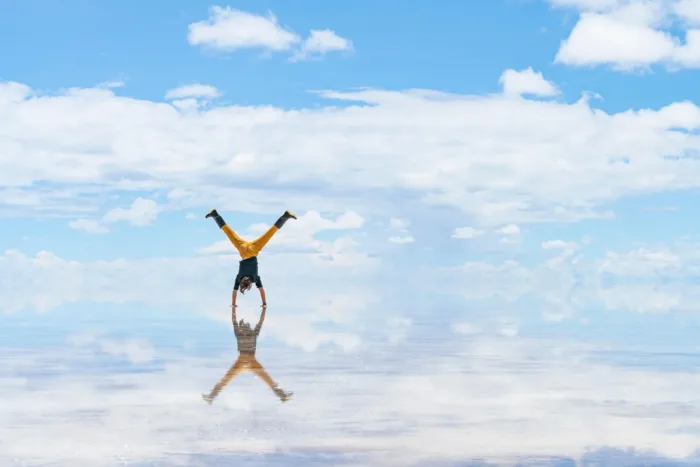
Trip idea · 11 days
Atacama Desert and Uyuni Salt Flats
The great contrasts of Chile and Bolivia, from the Atacama Desert to the legendary Uyuni Salt Flats.