Crossing from San Pedro de Atacama to the Uyuni Salt Flats is one of the most spectacular overland journeys in South America: three or four days by 4×4 across the Bolivian altiplano, past colorful lagoons, volcanoes, flamingos and stone deserts, all the way to the largest salt flat in the world. Here’s what the route is like and how to get ready for it.
What the Uyuni Salt Flats Tour Is Like
The most common option is a 3-day, 2-night tour that leaves San Pedro and ends in the town of Uyuni, or a 4-day, 3-night tour that loops back to San Pedro. You travel in 4×4 vehicles with a driver and guide, in small groups, and spend the nights in simple refuges and guesthouses on the altiplano.
On day one you clear Chilean exit formalities in San Pedro and climb to the Hito Cajón border crossing, at about 4,500 meters. There you enter Bolivia, and the Eduardo Avaroa Andean Fauna National Reserve begins.
Good to knowBring your passport or a valid ID, plus cash: the reserve entrance fee and some sites are cash-only, and there are no ATMs along the route.
From San Pedro to Uyuni, Day by Day
Day 1: Lagoons and Geysers
Laguna Blanca and Laguna Verde, at the foot of Licancabur volcano; the Dalí Desert, with rocks that look as if they’d been painted; the Polques hot springs, for a warm soak at more than 4,000 meters; the Sol de Mañana geysers and, late in the afternoon, Laguna Colorada, tinted red by its algae and full of flamingos.
Day 2: The Stone Desert
The famous Árbol de Piedra (Stone Tree), sculpted by the wind; a string of altiplano lagoons with even more flamingos; and then a gradual descent to the edge of the salt flat, where you spend the night in a guesthouse built from blocks of salt.

Day 3: The Uyuni Salt Flats
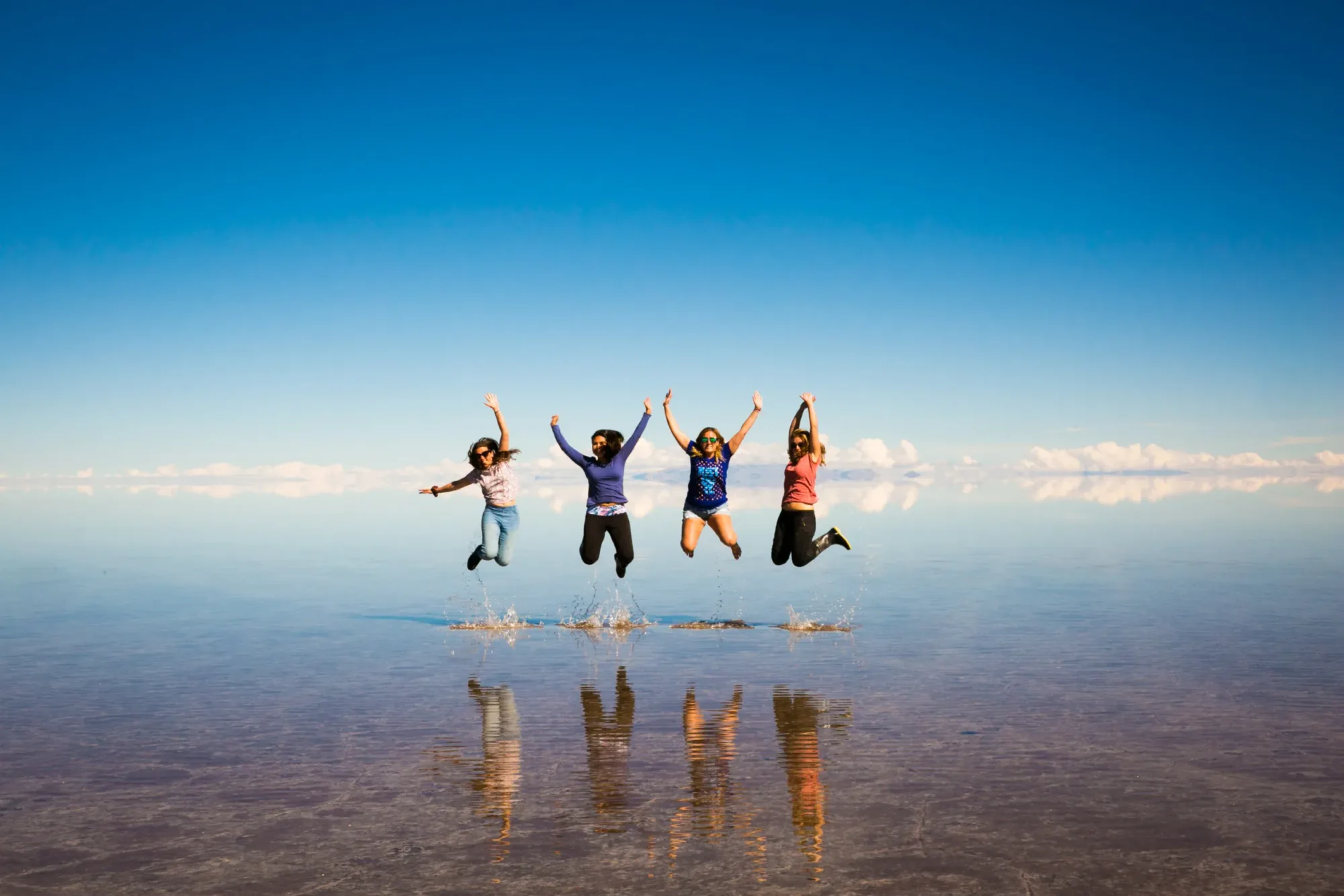
You set off before dawn to watch the sun rise over the salt flat. Then comes Incahuasi Island with its giant cacti, the playful perspective photos in the endless white and, to finish, the train cemetery on the edge of the town of Uyuni. On the four-day tour, the last day is the drive back to San Pedro through the same reserve.

Best Time to Visit the Uyuni Salt Flats
The salt flat has two faces, and both are worth the trip:
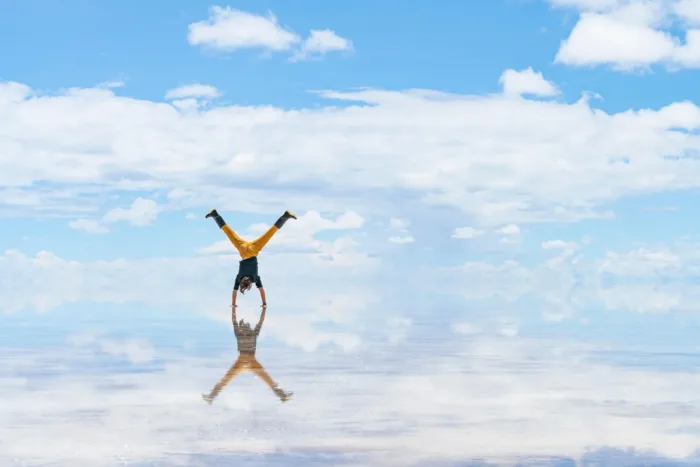
- Rainy season (January to March): a thin layer of water turns the salt flat into a giant mirror—the famous mirror effect. The trade-off: sometimes Incahuasi Island can’t be reached, and some routes close for a few days.
- Dry season (April to December): the salt flat is bright white and cracked into hexagons, all the roads are open and the skies are crystal clear. From June to August, nights at the refuges are very cold.

Altitude: How to Prepare
This is the most important part of the trip. The route stays above 4,000 meters almost the entire time, and the highest point, at the Sol de Mañana geysers, is around 4,900. To enjoy it:
- Spend at least two or three days in San Pedro before crossing, doing excursions that gain altitude gradually.
- Drink plenty of water, eat light and skip alcohol for the first few days.
- Walk slowly and rest if you get a headache. Coca tea helps.
- If you have any heart or respiratory condition, check with your doctor before you travel.
What to Pack for the Uyuni Tour
- Layers: a thermal base layer, a fleece and a warm windproof jacket.
- A hat, gloves, a scarf and a good sleeping bag (or ask for one on the tour).
- High-SPF sunscreen, sunglasses and lip balm: the radiation is intense.
- A headlamp, a power bank and toilet paper: electricity at the refuges is limited.
- Water, snacks and cash.
Altiplano refuges are basic, with shared rooms and showers that don’t always have hot water. It’s all part of the adventure: what you’ll see in those three days you won’t see anywhere else.
Our Uyuni Trips
Trip idea · 11 days
Atacama Desert and Uyuni Salt Flats
The great contrasts of Chile and Bolivia, from the Atacama Desert to the legendary Uyuni Salt Flats.

Group tour · 12 days
Magic of the Desert Group Tour: Santiago, San Pedro de Atacama & Uyuni Salt Flats
Set off on a group tour through the magical, authentic corners of the Chilean and Bolivian deserts!
Trip idea · 15 days
The Atacama Desert, the Uyuni Salt Flats, and Easter Island
From the Atacama Desert to the Uyuni Salt Flats and Easter Island: the great contrasts of Chile and Bolivia in one trip.